Quest 1 of 15
What Is AI? History, Types & Everyday Examples
Start from zero: learn what AI means and how it differs from ordinary software that follows fixed instructions. You will compare rules-based systems, machine learning, and generative AI, then explain the difference without technical jargon. This matters because the right tool depends on the task: a calculator follows rules, while a spam filter learns patterns from examples. By the end, you can spot exaggerated AI claims and ask what a tool actually does.
Start here
Imagine opening your phone in the morning. It unlocks when it sees your face, filters unwanted email, predicts the next word you might type, and recommends a route around traffic. Some of those features use AI and some use ordinary programmed rules. This lesson starts at the very beginning so you can tell the difference.
Big idea
Artificial intelligence is a broad name for computer systems designed to perform a particular task that normally involves human abilities such as recognising a picture, understanding a question, spotting an unusual pattern, or producing language. The word “intelligence” can be misleading: today’s AI does not have human experience, common sense, feelings, or intentions. It processes inputs using mathematical patterns and produces an output for a defined task.

Tap each example: rules or machine learning?
AI often means learning from data — not every smart app uses ML.
- Calculator: 7 × 8
- Email spam filter improving over time
- ATM blocks card after 3 wrong PINs
- Music app ‘Discover Weekly’ playlist
Tap Left or Right for each example, then "Why?" for the AI explanation.
Learn one idea at a time
Read, explore, then mark each idea when you can explain it.
Idea 1 of 11
Begin with ordinary software. A calculator does not learn how to add by studying thousands of sums. A programmer gives it exact instructions for addition, subtraction, and every button on the screen. When you enter 7 + 5, it follows those fixed instructions and returns 12. This is reliable because the task has clear rules, but the calculator cannot suddenly recognise a damaged machine or write a customer email unless somebody adds entirely new instructions.
Choose a deep dive
Open the topics you want to explore. The detail stays folded until you need it.
Deep dive 1Worked example: a supermarket checkout
A barcode scanner uses fixed rules to look up a product code and price. A camera above the checkout might use machine learning to recognise loose fruit from its appearance. A generative assistant might draft a daily summary of common customer questions. All three are software, but they solve different problems. The barcode lookup needs exact rules; visual recognition needs patterns learned from labelled images; the summary tool generates language and therefore needs a person to check names, numbers, and claims.
Deep dive 2Why AI can be impressive without being human
A system can process more examples than one person and detect subtle statistical relationships, yet still lack ordinary context. A route planner may calculate the fastest road while not knowing that local flooding has made it unsafe. A chatbot may explain a topic clearly while inventing a source. Capability in one task should never be confused with general understanding. Judge the output against the real situation and the consequence of being wrong.
Deep dive 3A simple test for AI claims
When an advertisement says a product is “AI-powered,” ask five questions: What exact task does it perform? What inputs does it use? What output does it produce? How was performance tested? What happens when it is wrong? If the seller cannot answer these questions, the AI label tells you very little. This habit helps you separate a useful tool from marketing hype.
Deep dive 4A recommendation is not a decision
Imagine a music app suggesting an Amapiano song because you played similar tracks before. The app has found a pattern in past listening, but it does not know your mood or whether the song is appropriate for a school event. AI can offer a useful recommendation; a person still decides what to do with it.
Deep dive 5When simple rules are better
A school library might use a fixed rule: if a book is overdue by seven days, send a reminder. That rule is clear, cheap, and easy to check. AI is more useful when the pattern is too complicated to write as a short list of rules, such as recognising many different kinds of spam messages.
Deep dive 6Case study: the mobile money fraud alert
A mobile money provider notices that fraudsters change tactics every few weeks, so a fixed list of rules keeps falling behind. The provider trains a model on thousands of past transactions labelled genuine or fraudulent. The model learns combinations that no single rule captured — a new SIM card, an unusual hour, a first-time recipient, and a maximum-value transfer happening together. When the model flags a transfer, the app pauses it and asks the customer to confirm. The pattern-spotting is automated; the final decision still involves the customer and, for large amounts, a human agent. This division of labour — model detects, person decides — appears in almost every responsible AI system you will meet in this course.
Deep dive 7Why 'the computer said so' is never a full answer
Every AI output is the product of choices people made: which examples to collect, what to label as correct, what threshold triggers an action, and what happens when the system is unsure. When a chatbot gives you an answer or an app blocks your transaction, somebody designed that behaviour. Understanding this helps you ask better questions — not 'is AI right?' but 'who built this, from what data, and how do I appeal if it is wrong about me?' These questions apply whether you are a student, a customer, or one day the person deploying the system.
Deep dive 8AI you already touch
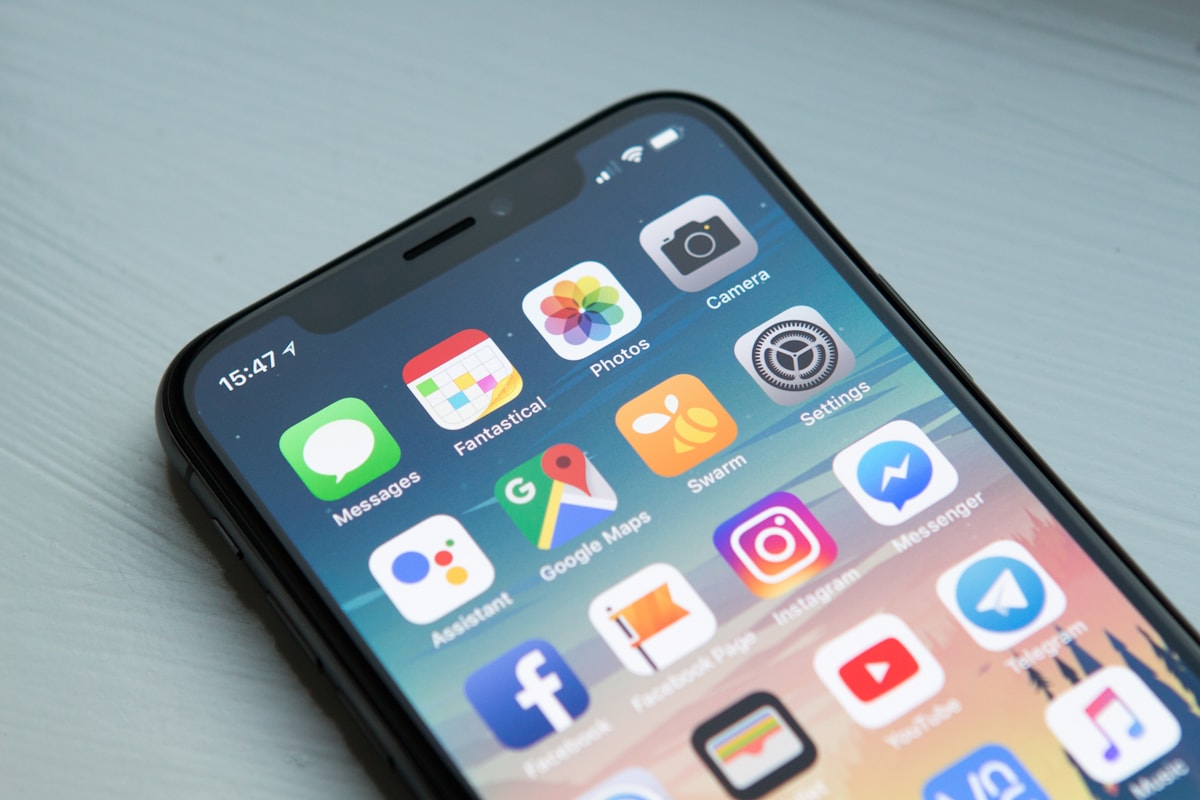
Recommendation feeds, spam filters, and map ETAs are everyday AI. The photo is a reminder that most people meet AI through ordinary screens — not science-fiction robots.
Deep dive 9Still check a trusted source
When AI explains a school topic, compare it with a textbook or library source. Looking real is not the same as being correct.

One-minute challenge
Connect this lesson to real life
Name one situation where this idea could help, and one thing a person should still check.
Explore a real-world example
Use the arrows to connect the idea to a visible situation.
Photo example
Example: learning with a laptop
Use AI as a study partner for drafts and practice questions. Keep ownership of what you submit, and verify facts that matter for marks or safety.
Key terms
Tap a term to flip and read the definition.
Optional further learningFree textbooks and trusted online resources
These sources informed the course structure. Use them to revisit a concept or study it in more depth.
Ready check
Tick each idea only when you could explain it without looking back.
Ready for practice? Use the interactive diagram to sort rules vs learning, then try the flashcards and quiz.
Extra context (audience, logistics, curriculum notes)
Built for: Anyone with no prior AI background — recommended before specialist courses.
Formats: Interactive diagrams · Flashcards · AI chat lab · Quiz
Introduction to AI — Part 1: definitions and everyday examples.
Next up
Ready for the next part?
When you've finished the reading, inline exercises, and knowledge check for this part, check the box to continue.