Quest 9 of 15
Ethics, Safety & Hallucinations
AI can invent convincing false facts and be manipulated by malicious prompts. Learn hallucinations, jailbreaking, safety settings, and your duty as a builder—not just a user—of AI tools. For example, you will test whether a citation exists before repeating it in an assignment.
Start here
AI can sound sure of itself even when wrong. This part teaches you to spot dangerous mistakes and why schools need safety rules — no security background needed.
Big idea
AI can sound confident while wrong (hallucination) or be manipulated to ignore safety rules (jailbreaking). Good builders combine guardrails, transparency, and human oversight.

Learn one idea at a time
Read, explore, then mark each idea when you can explain it.
Idea 1 of 5
Hallucination is fluent false information: invented citations, wrong dates, made-up statistics, non-existent books — delivered in the same confident tone as everything true the model says. It is not a rare glitch but a built-in consequence of how generation works: the model produces likely-sounding text, and when its training data is thin on your exact question, it fills the gap with plausible invention rather than silence. The danger scales with confidence mismatch — a wrong answer that sounded uncertain would be harmless; a wrong answer in perfect, assured prose gets copied into homework and shared as fact. Detection rule of thumb: the more specific an unsourced claim (exact figures, titles, quotes), the more it deserves independent checking.
Live interactive diagrams
Tap nodes, stages, or cards to explore — these diagrams match this module’s ideas.
Catch a hallucination
Sounds confident and complete.
Choose a deep dive
Open the topics you want to explore. The detail stays folded until you need it.
Deep dive 1Spotting a hallucination
Warning signs include very precise facts with no source, a citation you cannot find, or an answer that changes when you ask the same question again. Break the reply into separate claims and verify the most important ones first. A useful response to uncertainty is “I do not know yet,” not a confident guess.
Deep dive 2Safety is more than blocked words
A safe school assistant should refuse to write work for submission, avoid collecting private information, and direct serious health or safety concerns to a trusted adult or professional. It should also explain its limits in plain language. These rules protect learners even when a harmful request is phrased indirectly.
Deep dive 3Worked example: fact-checking one AI paragraph
A chatbot writes: 'The Kariba Dam, completed in 1959, is the largest dam in Africa by concrete volume and generates most of Zimbabwe's electricity.' Break it into claims. Completion date: checkable against encyclopedias and official histories — 1959 is right for the dam wall. 'Largest by concrete volume': suspicious superlative; other African dams compete depending on the measure, so this needs a precise source or should be softened. 'Most of Zimbabwe's electricity': changes year to year with water levels and other plants, so it needs current data, not a model's memory. Verdict: one solid claim, one dubious superlative, one time-sensitive claim. That per-claim habit is exactly how professionals verify AI text.
Deep dive 4Why models hallucinate at all
A language model is trained to continue text plausibly, and most training text is written in a confident register — encyclopedias, articles, textbooks rarely say 'I am not sure'. So when the model lacks knowledge, the most statistically plausible continuation is still a confident-sounding sentence. Newer systems reduce this with retrieval (fetching real documents before answering), citations, and training that rewards honest uncertainty, but the tendency is structural, not a bug being patched next week. Design your habits around it: the more confident and specific an unsourced claim sounds, the more it deserves a check.
Deep dive 5Confident can still be wrong
Hallucinations look polished. Guardrails block some harms, but jailbreaks and prompt injection try to bypass rules — report them; do not practice them on real systems.

One-minute challenge
Connect this lesson to real life
Name one situation where this idea could help, and one thing a person should still check.
Explore a real-world example
Use the arrows to connect the idea to a visible situation.
Photo example
Example: safety is a design choice
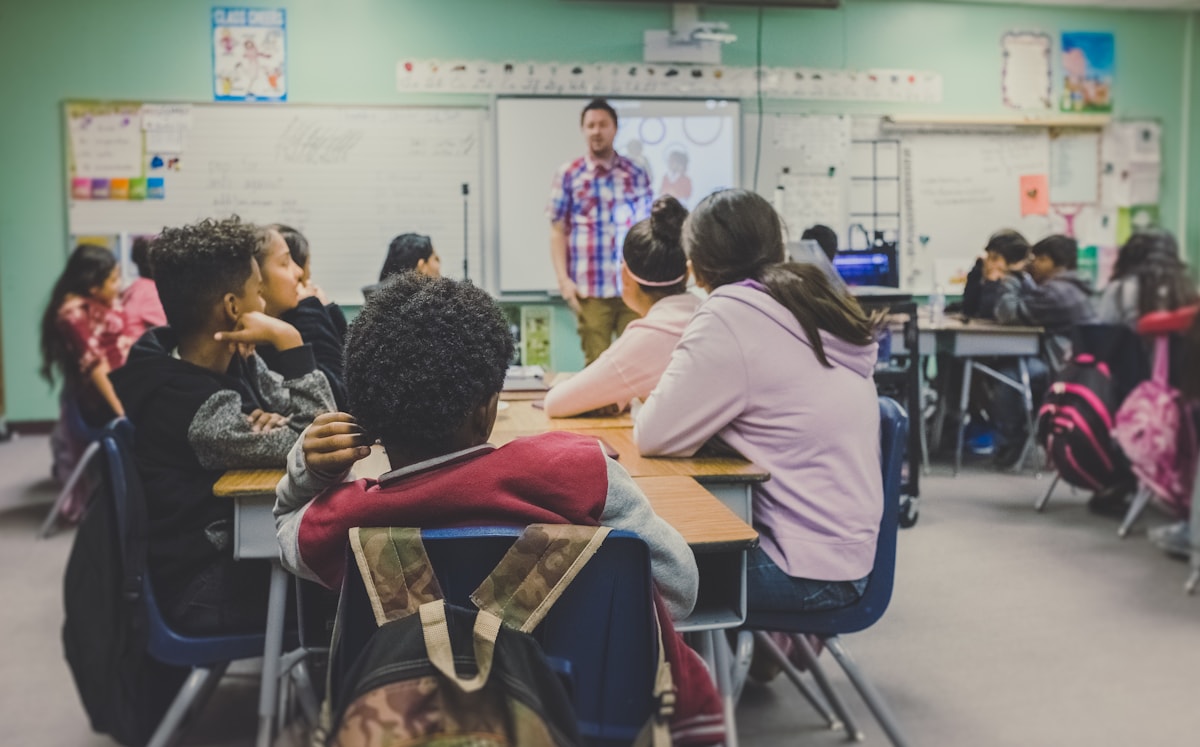
School bots need clear refusals (no cheating answers) and a path to a human teacher.
Key terms
Tap a term to flip and read the definition.
Optional further learningFree textbooks and trusted online resources
These sources informed the course structure. Use them to revisit a concept or study it in more depth.
Ready check
Tick each idea only when you could explain it without looking back.
Ready for practice? Hunt fact vs fiction, then co-write guardrails for a school-facing bot.
Extra context (audience, logistics, curriculum notes)
Built for: Safety lab uses harmful prompts only to show blocking—teacher frames this as professional security testing, not encouragement.
Formats: Case studies · Safety awareness chat lab · Policy drafting
AI Architect Module 9 — hallucinations, jailbreaking, safety guardrails (AI_Architect_10_Part_Course.md).
Next up
Ready for the next part?
When you've finished the reading, inline exercises, and knowledge check for this part, check the box to continue.